Showing posts with label Building Relationships and Developing People. Show all posts

Tuesday, 17 February 2015

You don't have to be first to really lead

I have been thinking about this post for awhile and my motivator today comes from spending a day with my son and then reading a post by @gcouros entitled, 5 Ideas for Conversations on Change.

If we lead with what is best for kids, good things will always happen.

We should always do what is best for our students.  From my days developing DI portfolios for grade 10 History, to hand coding webpages so that my class and their parents could have access to materials, to embedding a critical thinking methodology into department courses, they were always done because I believed it to be best for kids.  It was this conviction that built support for these ideas from department members and other staff. While I may have had the initial nugget of an idea it was only ever with the help, support and the willingness to innovate from my colleagues that allowed these ideas to come to fruition.  Great things can happen when you start working from what is best for students.

Help teachers know where they are and where they need to go.

No teacher wakes up and says, "today I choose to do exactly what I have done before even if it isn't good for kids."  Most teachers and administrators, do what they believe to be best for kids.   Even when they can't do what was best for kids, it isn't because of a lack of want.   It is usually because they can't get from their start line to the finish, or they do not even know where the finish is - or if the finish even exists (in education there really is no finish). No teacher ever wants to be left behind.  It is our job to listen to their concerns and wisdom from years of teaching and seek common ground.  If a teacher isn't doing what's best for kids in our eyes, they are not certainly doing what's worst for kids in their eyes.  We need to see things from their perspective; find common ground and start building our common ground to start working towards what is best for kids. 

It is better to support teachers than pull them along.

How many times have you seen in movies where someone falls of a cliff, building, airplane, etc. and someone else catches them?   How often is that really successful?   Would you rather just save someone or develop someone?  Supporting our teachers through change will have a far greater impact than just pulling them begrudgingly along.  This will be a long journey and cannot be done over night.  Break this journey up, provide markers for success and check ins for help.  Supporting people is the key to doing what is best for kids.   We need to let teachers know it is safe to step outside of their comfort zone and try something new.   When teachers do this they are putting themselves out there and they need to know we support them.  When this starts to happen, good things will come about.  

Listen, model, learn together - My day cross country skiing.


https://www.parentmap.com/c/528547a9/images/enews/content/joanna_nesbit_ty_and_dad_skiing_manning_2008.jpg
As an example, yesterday my family and I went cross-country skiing, at first it was a challenge for my son.  He was doing something he never had done before. He was uncomfortable and embarrassed as he kept falling going up hills.   I could have lead him, gone in front and pulled him up the hill.  It would have been quicker, it would have been easier, but what would have been learned?  Instead I stayed behind, offering suggestions and support, occasionally coming up beside him to listen to him and try and figure out what he was attempting to do. I then attempted to model technique (with all my none cross country experience) and eventually it clicked for him and we were off on our journey, together!

Tuesday, 20 January 2015

Connected Culture, Collaborative Culture: Comes From the Top!

Today I read an old post from Edutopia, on creating a Twitter driven school culture.  Great piece on getting your staff going on Twitter.  It can be found at: Link to article.

It offers some great ideas for leaders to engage their community, but not just on Twitter, really their suggestions work on creating a positive culture that will be able to accomplish anything.

http://41.media.tumblr.com/tumblr_m6lv6gWSct1qz8089o1_1280.png

Edutopia is absolutely correct in leading off with modelling.  We as leaders must take those first critical steps in everything we do, from instruction to behaviour to tech use we have to show and set our expectations through modelling.

Next, they suggest displaying your Twitter handle.  This is great for Twittet but don't forget to show how else you connect and to also display how you want others to teach and learn.

The third example of real time encouragement is crucial, again crucial not just on Twitter.  It's easy to retweet and favourite, but it takes a real effort and go the extra mile and talk face-to-face with others and let them know how much you appreciate what they do.  I need to work on the face2face component as well.

Their fourth point really comes down to voice.  Let people know that their voice is heard.  This goes for staff and students.  The twitterfall in the staff room is a great plan.  I will use our hallway LFD TV for this.

We need to trust our staff that their backchannel Chet's on Twitter and at the water-cooler will be purposeful and have meaning. The more open we are the more conversation and the greater the ideas will become.

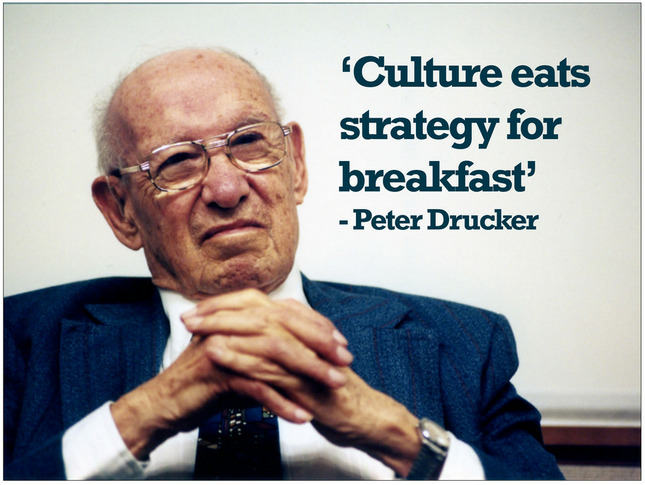
The Final point on creating a team will naturally occur if we pay attention to all of their other points.  If we create a safe, collaborative environment where we learn together great things will happen.  And as Drucker says, "culture will eat strategy for breakfast."


Thursday, 27 November 2014

What are Your Big Three?

This post was inspired by 8amber8 and her blog http://technicallyteamann.com.  Amber posted about what her big three are when it comes to admin. I thought I would come up with something new, something brilliant. Then I realized I am me and that's simply not possible.

I then returned to the tag line of my blog, these are and will be my big three:

Instruction LEADS, Relationships ENGAGE, Technology EMPOWERS!


Instruction leads the learning for staff and students in a school. Learning is the cornerstone, the foundation for everything we do. If we are not all learning effectively, what is the point? We need to ensure that we keep this focus when the maelstrom of issues get thrown at us, if we do this we will always have a focus and clarity to see us through to our goal.

The connections we make, the relationships we development with students and staff are the next most important thing we can do. It is the WHO we are, not the what we do that will bring our reluctant learners (students and staff) into our building, into our learning. These connections, both virtual and realtime, are truly what will help us maintain focus and direction in times of crisis or disruption. When we are able to show students and staff the relationships/connections between ideas and knowledge real learning happens.  Relationships/connections matter.

Once we have our learning, our instruction, our relationships and connections created we can truly empower learning for all. This empowerment can come from our use of technology as we give everyone in our school a voice. A voice they might not have had if it were not for our instruction, or relationships and if we did not empower them through the use of technology. Student voice will come from their ability to create tremendous products of their learning.

While I have a continuum for my big three, could I put them in a hierarchy? Let me know what you think.

Tuesday, 18 November 2014

What 21st Century Education Means to Me

Over the last several years, I have engaged in some professional dialogue and at times heated conversations regarding what education should look like.  More often than not I have pointed to the remarkable amount of change our world and society has seen over the last 200 years, yet how little the education system has changed.  As I enjoy this installment of the #peel21st blog hop, I am looking forward to seeing what learning should look like today.  Please don't forget to check out the other blog posts found at the bottom of this post.
________________________________

Education needs to be about students and teachers being:


Teacher as:

Context maker,creator,  knowledge interrogator, skill coach.

Student as:

Content maker, creator, knowledge inventor, skill development driven. 

Together:

Through a co-learning approach where we synthesize and evaluate ideas  in order to create new information and new ideas.   

We become change makers as we discover connections between ideas, available content and people.  We are living the words of Alvin Toffler  - we learn, unlearn and relearn.  

We need to make:

A shift to real world experiences, where we engage in project based learning in both face-to-face and virtual environments to make connections between new ideas and connections with each other. Through this interaction, we will find relations between things we have tried too long to keep apart. These projects, connections and relations need to be grounded in a framework of critical thought that allows us to synthesize and evaluate the new information before us. 

That's it, that's all...I wrote this whole post without saying 21st Century or technology! Oh darn I just did!

Other blogs involved in this blog hop:

Susan Campo – http://susancampo.ca
Josh Crozier - http://joshcrozieredu.wordpress.com/
Jim Cash – http://makelearn.org
Shivonne Lewis-Young – http://slewisyoung.wordpress.com
Greg, Pearson – http://leaderinadigitalworld.blogspot.ca
Phil Young – http://sphillipyoung.wordpress.com
James Nunes – http://joyousteaching.blogspot.ca
Donald, Campbell – http://ateachingyear.wordpress.com
Ken Dewar – https://mysite.peelschools.org/personal/P0031112/Blog/default.aspx
Graham Whisen – http://ideaconnect.edublogs.org/
Heather Lye – http://teachinginspiraXons.blogspot.ca/
Lynn Filliter – http://assessmentgeek.edublogs.org
Debbie Axiak – http://debbieaxiak.blogspot.ca
Alicia Quennell – http://aliciaquennell.blogspot.ca/
Jonathan So – http://www.Mrsoclassroom.blogspot.ca
Jim Blackwood – http://jimmyblackwood.wordpress.com
Jason Richea – http://beyondangrybirds.blogspot.ca/
Tina Zita – http://misszita.wordpress.com
Heather Lye @MsHLye
Engy Boutros @mrsboutros
George Couros @gcouros

Sunday, 9 November 2014

Once again technology is about connections

Last week I attended #BIT14 with a team of teachers from my school.  It was a great conference and my attendance at this conference once again reminded me that technology brings us together and it doesn't drive us apart.  Technology (social media and twitter et al) is about connections.


At this conference I was able to find several teachers I had taught with over 10 years ago by finding them on the #BIT14 hashtag.  I would have never looked them up had it not been for a conference on technology.  I found them using technology.

I renewed a friendship with a colleague from another board that I worked with on OHASSTA.  I think it had been about 4 years since we last talked.  Lots of great face-to-face conversations occurred and great ideas shared once technology let us find each other again.

Even though I work in the same school board as many of the attendees at the conference and have had twitter convos with them, it was our common desire to effectively use technology to reshape education that brought us together.  Twitter helped us find each other when we were in the same workshops together.

Finally, people I had followed and have been followed by on twitter were able to find me, and I them. I was able to meet people from across Canada, people I would not have known even existed if it were not for technology.

Technology brings people together, so that we can share ideas and learn from each other.